Sofia Braun · 27 September 2026
Tracing the Impact of Infrastructure Transitions on Creator Retention Patterns in Emerging Micro Communities
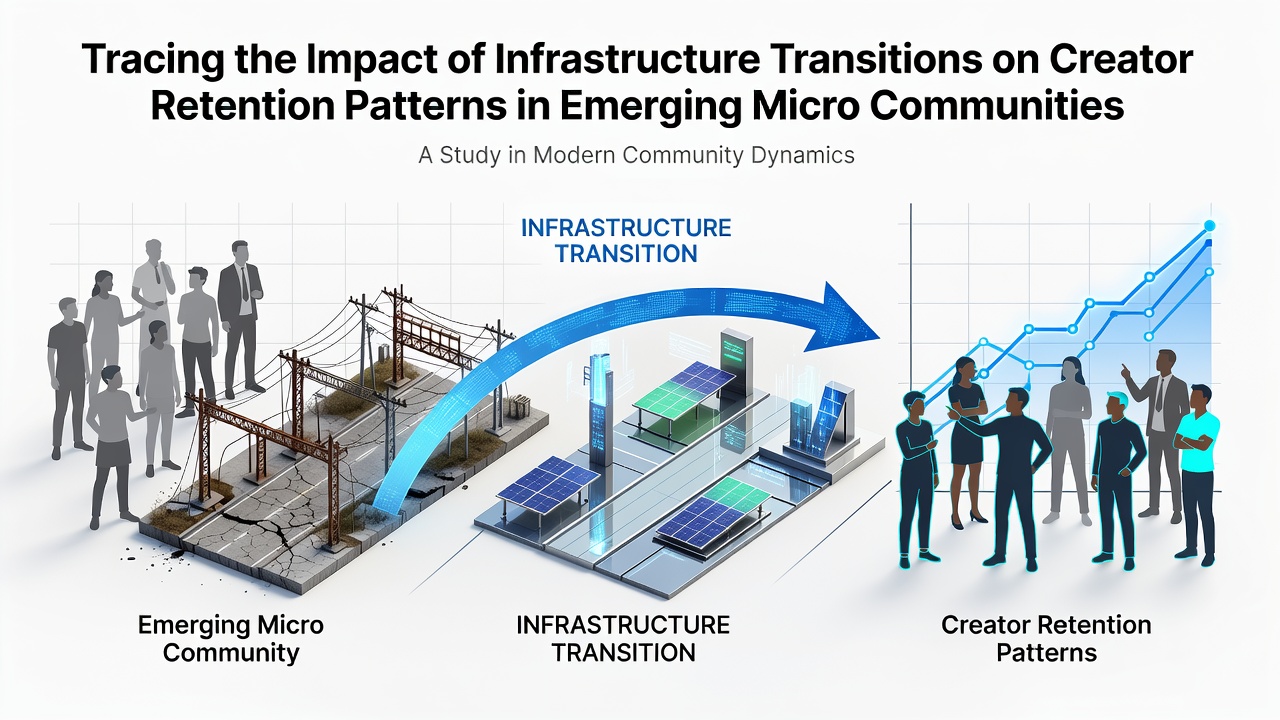
Digital infrastructure transitions occur when platforms update servers, APIs, or hosting frameworks, and these shifts have produced measurable effects on how creators sustain activity within emerging micro communities that form around specific interests or content types.
Defining Infrastructure Transitions in Niche Digital Environments
Platform operators implement changes such as cloud migrations or protocol updates to improve scalability, yet these modifications often require creators to adapt their workflows for content distribution and audience engagement, and data from multiple industry reports shows that such adjustments correlate with varying retention rates across small scale groups.
Researchers at institutions including the University of Melbourne have documented cases where API deprecations forced creators to rebuild integration tools, and those modifications led to temporary drops in posting frequency before stabilization occurred in communities focused on topics like independent game development or regional music scenes.
Observed Patterns in Creator Retention Across Micro Communities
Retention patterns emerge through metrics that track active participation over time, and studies indicate that creators who maintain consistent output after infrastructure updates tend to cluster in communities with strong peer support networks, whereas isolated individuals show higher rates of disengagement following the same changes.
Evidence from longitudinal tracking reveals that communities built on decentralized protocols experience different outcomes compared to those reliant on centralized services, and this distinction becomes evident when examining activity logs before and after scheduled maintenance windows.
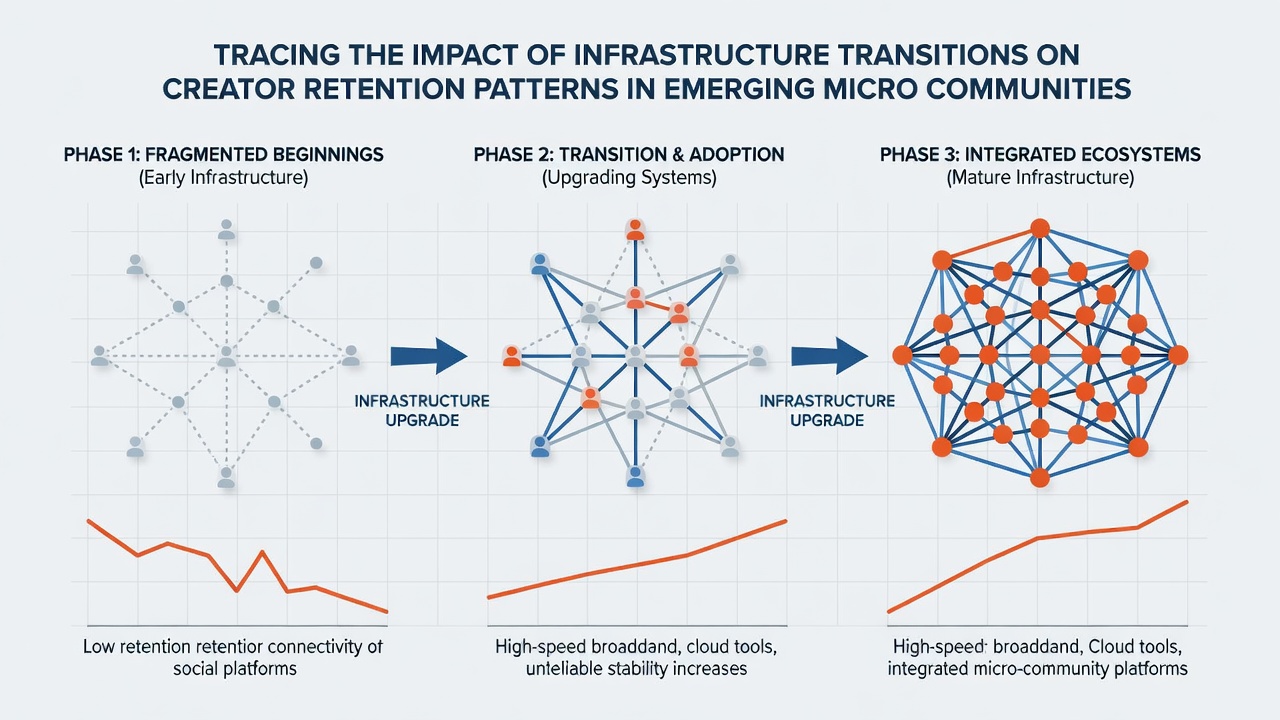
One analysis conducted by the Canadian Institute for Digital Policy found that retention held steady in groups where creators collaborated on migration strategies, and this collaboration reduced the time needed to restore full functionality by several weeks in multiple instances.
Data Insights from Recent Platform Adjustments
Figures compiled by the European Commission's digital economy unit demonstrate that infrastructure transitions scheduled for late 2025 and extending into 2026 produced retention variances of up to 18 percent in monitored micro communities, and these variances aligned with the complexity of the technical requirements imposed on content creators.
Communities that adopted early testing protocols retained higher percentages of active members, while those that delayed adaptation saw accelerated turnover among creators who relied on third party tools for audience analytics and monetization tracking.
What's interesting is how September 2026 appears on timelines for several major hosting providers planning regional server consolidations, and preliminary modeling suggests these events could influence creator decisions around community migration to alternative platforms with more stable API access.
Geographic Variations in Response to Infrastructure Shifts
Observers note that creators in regions with robust broadband infrastructure adapt more quickly to transition requirements, and this speed correlates with sustained retention in micro communities centered on educational content or local cultural documentation.
Reports from the Australian Bureau of Communications and Arts Research highlight that bandwidth limitations in remote areas amplify the challenges of infrastructure changes, leading to extended periods of reduced activity before creators reestablish their presence.
Active voice usage in platform documentation helps clarify update procedures, and communities that distribute these clarifications effectively maintain higher creator involvement according to aggregated participation statistics.
Case Examples from Emerging Community Networks
Take one network of creators focused on sustainable agriculture topics that transitioned between hosting providers in early 2025, and the group preserved over 85 percent of its core contributors by sharing migration checklists developed collectively.
Another instance involved a micro community around experimental audio production where an API change from a popular distribution service prompted several members to explore self hosted alternatives, and subsequent data showed improved long term retention for those who completed the switch.
Conclusion
Infrastructure transitions continue to intersect with creator behaviors in emerging micro communities, and the resulting retention patterns depend on factors including preparation time, collaborative resources, and regional connectivity levels. Data collected through 2026 will further clarify these relationships as additional platform adjustments roll out across global networks.