Sofia Braun · 13 September 2026
Platform Evolution and Its Effects on Interaction Quality in Niche Digital Spaces
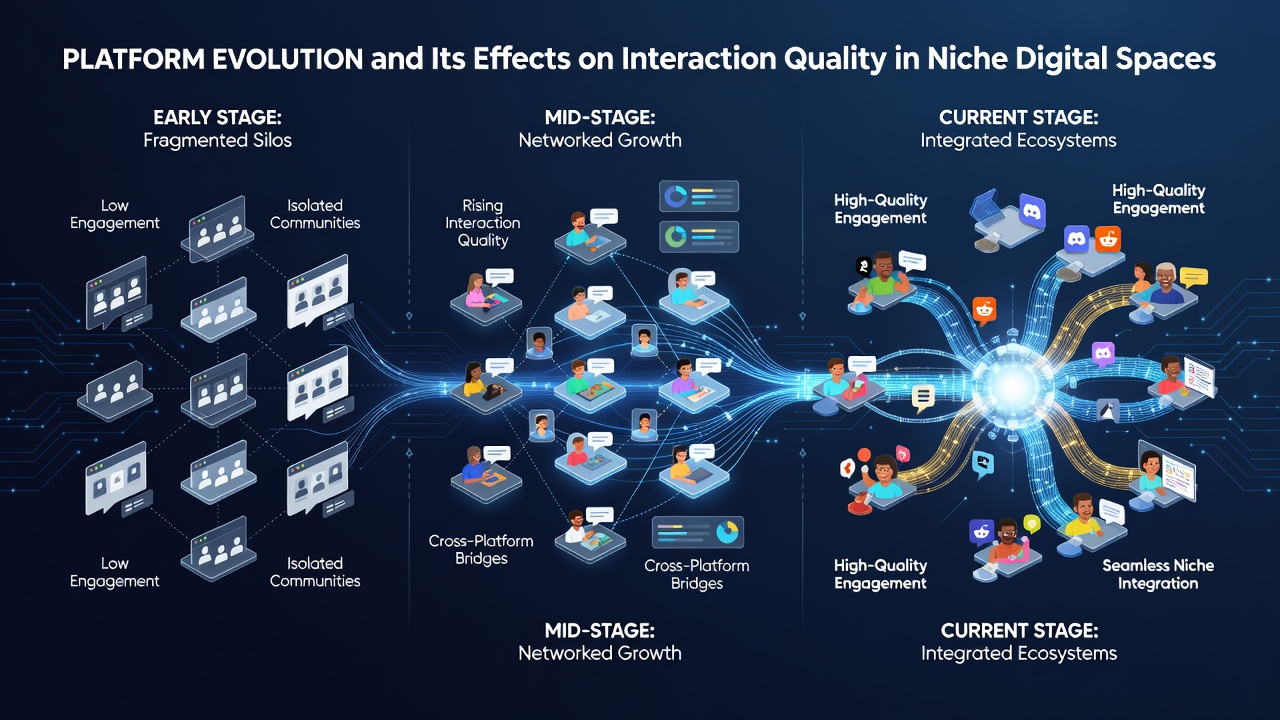
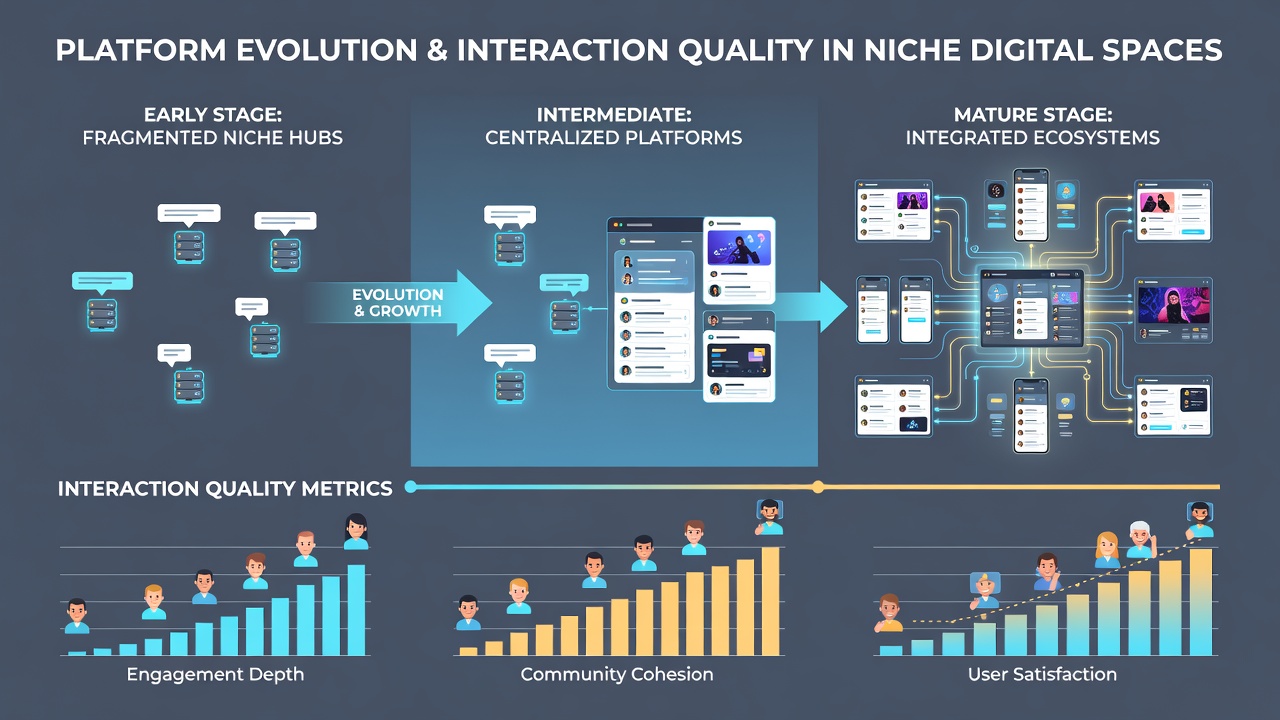
Platform evolution has reshaped niche digital spaces such as specialized forums, hobbyist servers, and topic-focused social groups, and these shifts alter how participants connect, share information, and maintain community standards. Data from multiple studies track changes in algorithms, moderation tools, and interface designs that affect engagement patterns, while figures reveal variations in response rates and content depth across different platforms over time.
Historical Shifts in Platform Architecture
Early niche spaces relied on static bulletin boards and email lists that supported threaded discussions without algorithmic interference, yet later developments introduced dynamic feeds and recommendation engines that prioritize certain posts based on user behavior metrics. Researchers at various institutions have documented how these architectural changes, implemented gradually since the mid-2010s, influence visibility for smaller groups where content volume remains limited compared to mainstream networks. By September 2026 several major platforms had rolled out enhanced machine learning filters aimed at reducing spam in specialized channels, and reports indicate these updates produced measurable differences in reply frequency within hobby communities.
Algorithmic Changes and User Engagement Patterns
Algorithms now determine which posts surface in niche feeds, and this process relies on signals like dwell time, share velocity, and comment chains rather than chronological order alone. Studies conducted across North American and European research centers show that such ranking methods can elevate high-engagement material while burying slower-paced exchanges typical of technical or creative subgroups. Observers note that platforms incorporating real-time personalization often see initial spikes in activity followed by declines in sustained conversations, whereas communities that retain manual curation options maintain steadier interaction levels. One analysis from academic sources tracked subreddit-style groups and found that algorithm updates correlated with a 15 to 20 percent drop in cross-thread references over a two-year period.
Moderation Tools and Their Role in Quality Control
Automated moderation systems have expanded in niche spaces to handle scale, and these tools scan for policy violations using pattern recognition trained on large datasets. Evidence from regulatory bodies in the European Union and Canada demonstrates that consistent application of such systems reduces certain forms of disruptive content, yet the same data shows occasional over-filtering that removes legitimate niche terminology or context-specific references. Industry reports from organizations like the Interactive Digital Software Association highlight how hybrid human-AI moderation setups produce higher retention rates in gaming and creative forums compared to fully automated approaches. Participants in these environments frequently report that transparent appeal processes help preserve interaction quality when automated decisions affect ongoing threads.
Regional Variations in Platform Policies
Policy frameworks differ by region and affect how platforms operate within niche spaces, with the Australian Communications and Media Authority emphasizing transparency requirements around content ranking, while the U.S. Federal Trade Commission focuses on disclosure standards for algorithmic influence. These regulatory approaches have prompted platforms to adjust features for localized compliance, and figures from cross-border studies indicate that such adaptations sometimes lead to segmented user experiences where interaction styles vary between regions. Data collected through university-led surveys reveal that users in jurisdictions with stricter disclosure rules encounter more consistent content ordering, which in turn supports more predictable discussion flows within specialized groups.
Measurement of Interaction Quality Over Time
Quality metrics in niche spaces often include thread longevity, response diversity, and knowledge retention rates, and longitudinal data collected by research institutions track these indicators across platform iterations. Findings indicate that spaces allowing granular control over notification settings experience steadier participation levels, whereas those emphasizing broad reach metrics show higher turnover among core contributors. Analysts examining trends up to September 2026 observed that platforms introducing optional depth-focused modes recorded improved scores on multi-turn conversation measures, and these adjustments appear tied to specific feature rollouts rather than overall user growth.
Conclusion
Platform evolution continues to modify the structural conditions under which niche digital interactions occur, and available evidence from government agencies, academic research, and industry tracking provides a record of these effects across multiple dimensions. Continued monitoring of algorithmic adjustments, moderation practices, and regional policy impacts supplies ongoing data points that document shifts in engagement patterns within specialized online environments.