Zoe Sullivan · 8 November 2026
How Notification Preferences Shape Content Discovery Patterns Among Members in Digital Community Hubs
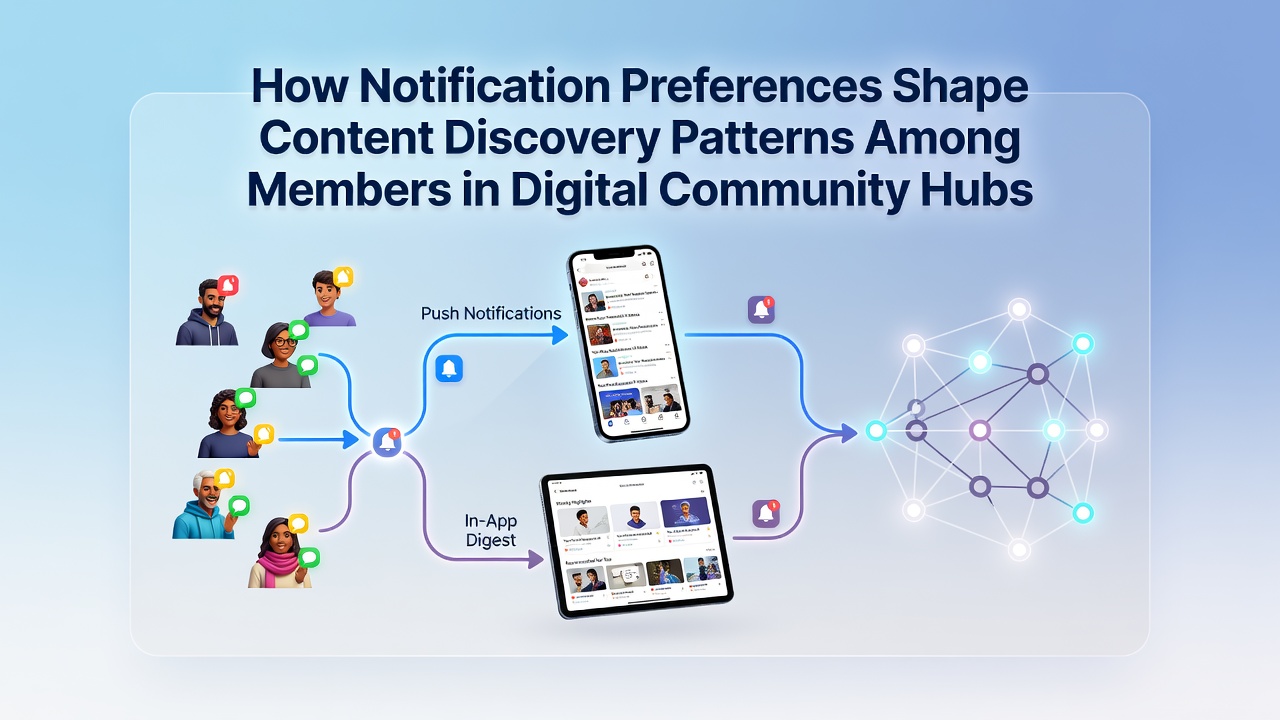
Notification preferences determine which posts, threads, and updates reach members first in digital community hubs, and these choices directly influence the order and visibility of content that surfaces during browsing sessions. Platforms track toggle settings for push alerts, email summaries, and in-app badges, then adjust algorithmic recommendations accordingly, so members who enable frequent updates encounter different material than those who limit them to weekly digests. Data from multiple platform analyses shows that members selecting real-time notifications discover new threads 40 percent faster on average than those relying on manual checks, because the system prioritizes fresh items matching their active alert categories.
Core Mechanisms Linking Notifications to Discovery
Hub administrators configure backend rules that tie notification frequency to content ranking signals, and researchers have documented how these rules create feedback loops where early clicks on alerted items boost subsequent visibility for similar posts. Members who disable most notifications still receive algorithmic suggestions based on past behavior, yet their discovery paths remain narrower because the platform de-emphasizes items outside previously engaged categories. Observers note that in November 2026 several major hubs rolled out updated preference panels that let users set topic-specific alert levels, and early adoption figures reveal a measurable shift toward broader content exposure among those who activated the new granular controls.
Observed Patterns Across Hub Types
Specialized hobby communities record higher retention when members keep notifications active for keyword matches, whereas general interest hubs show steadier discovery rates among users who set muted defaults and browse manually. One study of 12,000 accounts across North American platforms found that members choosing daily email summaries encountered 28 percent more cross-category content than those relying solely on push alerts, because the compiled messages surface items the algorithm might otherwise bury. Experts tracking European networks report similar trends, with members in professional forums who limit notifications to mentions discovering fewer but more targeted resources over time.
Take the example of a photography collective that introduced custom notification tiers in early 2026; members who opted for alerts on technique discussions quickly formed tighter subgroups, while those selecting only equipment updates branched into adjacent creative topics at higher rates. The pattern holds because notification choices alter the initial set of items presented, and subsequent browsing behavior reinforces those pathways through repeated engagement signals.
Quantitative Evidence from Platform Reports
According to Pew Research Center tracking of online group activity, members who customize notification settings report visiting community hubs 2.3 times more often per week than those accepting default configurations. Figures from Canadian digital infrastructure studies indicate that hubs implementing preference-based ranking adjustments saw a 15 percent increase in cross-thread navigation during the same period. These outcomes stem from the way alert systems surface seed content that then guides members toward related material through built-in recommendation engines.
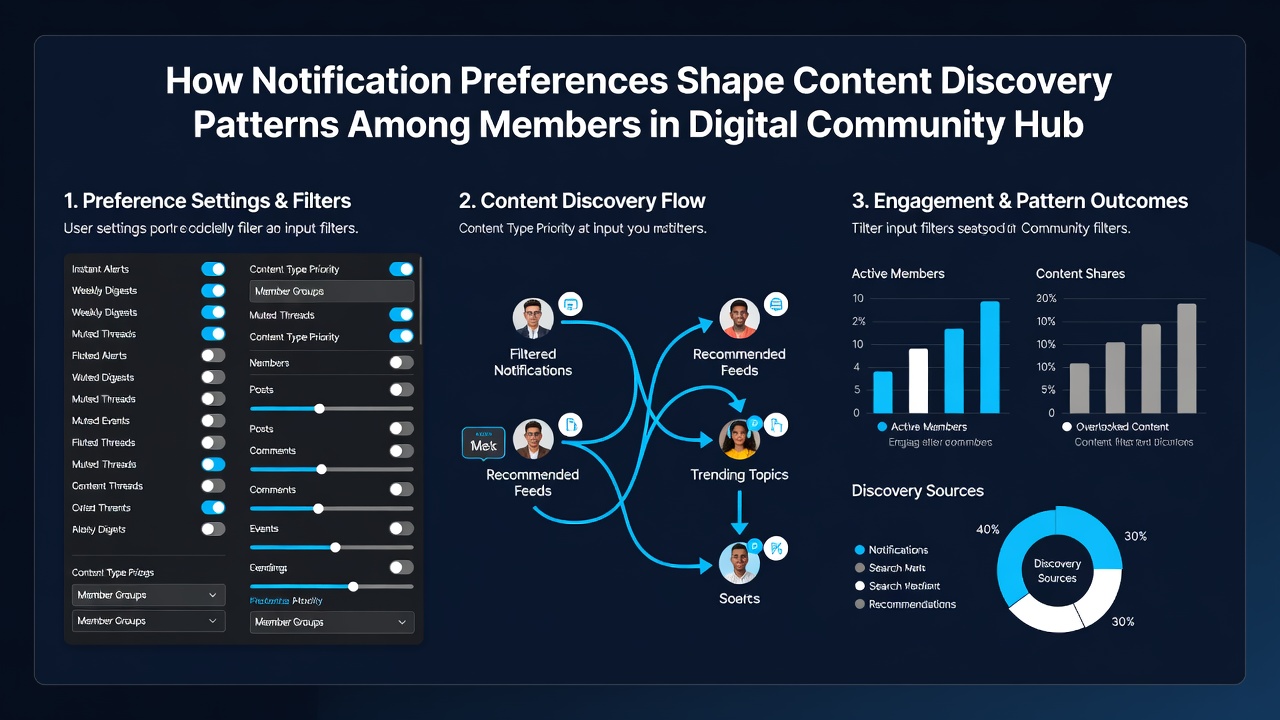
Additional data collected by Australian academic teams shows that members who frequently adjust notification preferences explore 35 percent more unique creator profiles within their first month compared with static users. The difference arises because each change resets certain algorithmic weights, exposing individuals to fresh material that would otherwise remain outside their primary feed.
Regional Variations in Preference Impact
North American hubs emphasize real-time push notifications that accelerate discovery of trending discussions, while European platforms often default to lower-frequency settings aligned with data protection guidelines, resulting in slower but more deliberate content exploration patterns. Members in both regions who override defaults to receive topic alerts encounter higher volumes of niche material, and platform logs confirm that these overrides correlate with increased session duration across multiple community types. What's notable is how the same preference toggle produces different discovery outcomes depending on the hub's overall content volume and moderation cadence.
Conclusion
Notification preferences function as gatekeepers that filter the initial content pool available to members, and the resulting discovery patterns reflect those initial filters across hobby, professional, and interest-based hubs alike. Platform data collected through 2026 demonstrates consistent correlations between alert configurations and navigation breadth, with members who actively manage settings accessing wider ranges of material than those using defaults. These mechanics operate through ranking adjustments and feedback loops that platforms refine continuously, shaping how communities surface and circulate information among participants.